
Request a move quote
Most people moving to Egypt from the UK are well-prepared for the life they’re moving towards – the climate, the cost of living, the international schools, the pace of Cairo or the ease of Hurghada. Where they’re often less prepared is for the customs process on the other end, and for what it actually costs to get a household’s worth of belongings there properly.
Egypt’s customs process for household goods has specific requirements that differ significantly from moves to Europe or the Gulf. One of them – the mandatory inspection of audio-visual items – affects virtually every household shipment and takes a minimum of 3 weeks. Another is the CAPMAS inventory requirement, which has to be right in both English and Arabic before anything moves. Both of these affect not just your timeline but which shipping option actually makes sense for your move – which is the question most people searching for furniture removals or house removals to Egypt are really trying to answer.
This guide sets out how a UK-to-Egypt removal actually works, what it costs, and how to plan the cost and the customs timeline together, with enough detail to plan yours accurately.



Sea freight groupage (shared container) is the standard method for UK-to-Egypt household moves. Your goods travel in a shared container from the UK, typically transiting through a hub port in the Mediterranean, before arriving in Egypt.
Groupage (shared container): Transit time 6–8 weeks from collection to port arrival in Egypt. Most cost-effective for moves up to a full 2–3 bedroom household.
Full container load (FCL): Transit time is similar – 5–7 weeks. The advantage is that your goods are not mixed with other shipments, reducing handling and making the customs process slightly more predictable. More expensive, and typically reserved for 3-bedroom+ moves where the volume justifies a dedicated container.
Air freight: Available for small volumes or urgently needed items. Transit time 5–7 days. Significantly higher cost per cubic metre or kilogram.
Main ports of arrival in Egypt:
After port arrival, the in-country partner manages customs clearance. The time from port arrival to delivery in Egypt is typically 2–4 weeks, depending on the contents of the shipment and how quickly documentation is confirmed. With audio-visual items, add at least 3 weeks to this estimate.
Cost ranges:
A full breakdown of what drives these figures, and how to choose between them, is below.

This is the question most people searching for “furniture removals UK to Egypt” or “house removals to Egypt” actually want answered, so here it is in full – and here is the detail most cost pages leave out: the right shipping option depends on your CAPMAS inventory and your 6-month timing window, not on price alone.
Groupage (shared container): From £2,500 for a studio or one-bedroom volume of furniture and belongings. A 2–3 bedroom household by groupage typically starts from around £4,000, rising with volume. Transit is 6–8 weeks port-to-port. This is the option most house removals to Egypt use, because most household volumes don’t justify a dedicated container.
Full container load (FCL): From approximately £4,500 for a three-bedroom household. Transit is similar to groupage at 5–7 weeks, but your goods aren’t mixed with other shipments – which can make the CAPMAS inventory and customs process slightly more predictable, since there’s no risk of another customer’s items complicating the shared container’s clearance.
Air freight: Reserved for small, urgent volumes – a few suitcases, essential documents, items you need in the first fortnight rather than full household furniture. Transit is 5–7 days, but the cost per kilogram is significantly higher than sea freight.
Why the cheapest option isn’t automatically the right one: Price isn’t the only variable that matters on this route. Your CAPMAS inventory — the valued, dated, English-and-Arabic document every shipment needs – has to be complete and accurate before your goods can clear customs, regardless of which shipping method carried them. A rushed or incomplete inventory delays release just as much on an FCL shipment as it does on groupage. And because Egyptian customs requires your goods to arrive within 6 months of your own arrival date, the shipping method that matters most is the one that gets your belongings to Egypt inside that window – not necessarily the cheapest or the fastest on paper.
If your shipment contains audio-visual items (most do – DVDs, books, an old hard drive, things people forget they own), the AV inspection adds a minimum of 3 weeks to clearance regardless of whether you booked groupage or FCL. Paying more for a dedicated container does not buy you a faster route through that specific step. What it can buy you is a more predictable overall process, since your goods aren’t waiting on another customer’s items to be sorted at the same time.
The decision that actually matters is matching your shipment’s departure date – and the inventory preparation behind it – to your Egypt arrival date and the 6-month rule, not picking the cheapest quote in isolation. Your move manager works backwards from your planned arrival date in Egypt to recommend the shipping method and departure window that gets your furniture there inside the rule, with an inventory that won’t get queried at the Egyptian end.
A professional survey before booking gives you an accurate cost for your specific volume – the ranges above are starting points for planning, not fixed quotes.
This is the step that delays the most Egypt moves, and the one that most guides mention only in passing.
Egyptian customs authorities inspect all audio-visual items in a household shipment for content that may conflict with Egyptian law, including material that could be interpreted as politically, religiously, or socially sensitive. The categories of items subject to inspection are broad:
This inspection is mandatory and non-negotiable. It applies to every household shipment that contains these items. The inspection is carried out by the relevant Egyptian authority and typically takes a minimum of 3 weeks.
If your shipment includes any audio-visual items – and most household moves do, even if you think you don’t own much media – your delivery timeline extends by at least 3 weeks after port arrival. This is not unusual or a sign that something has gone wrong. It is the standard process.
What you can do to minimise delays:
What to avoid shipping: Egyptian customs law prohibits the import of: narcotics and controlled substances, firearms and ammunition, birds and bird products, and in practice, any content that could be considered politically sensitive, missionary in nature, or contrary to public order. Books and media touching on any of these areas may be confiscated, even if they are personal property.
All household goods imported into Egypt must be accompanied by a detailed moving inventory – and that inventory must be in both English and Arabic.
CAPMAS (Central Agency for Public Mobilization and Statistics) is the Egyptian government authority that requires an official, valued, dated, and signed inventory of every item being shipped. The inventory must include:
The Arabic translation and the notarisation of the inventory are coordinated by the removal company’s in-country partner in Egypt. This is not something you arrange yourself – it is part of the customs declaration process managed by the in-country partner on your behalf.
What you do need to provide: a detailed, honest, complete inventory before the shipment departs the UK. Incomplete or vague inventories – “miscellaneous household items” rather than individual descriptions – create problems at the Egyptian customs end that delay clearance for everyone, and that delay applies however much you paid for transit.
Egyptian customs regulations require that household goods arrive in Egypt within 6 months of the owner’s arrival date in Egypt. This is strictly enforced.
The practical implication: if there is a long gap between your arrival in Egypt and your shipment’s departure from the UK, you may approach or exceed the 6-month window. Your move manager will calculate this timing when you book your removal – if the timing is tight, they will flag it and advise on adjusting the shipment departure date or shipping method.
For most people, the 6-month rule is not a problem – the gap between arrival in Egypt and shipment delivery is typically 2–3 months. But for people whose Egypt plans involve a long overlap period (staying in Egypt temporarily first, then returning to the UK to manage the move), the timeline needs to be managed carefully, and that’s exactly where the choice between groupage and FCL becomes a timing decision rather than just a cost one.
Document | Notes |
Original passport | With Egyptian Resident Permit or Work Visa |
Original Bill of Lading (sea) or Air Waybill (air) | Provided by the shipping company |
Detailed inventory (English and Arabic) | Valued, dated, signed. Arabic translation coordinated by in-country partner. |
Egyptian Resident Permit or Work Permit | Required for customs clearance; must be valid before shipment arrives |
Your removal company’s in-country partner handles the customs submission and manages communication with Egyptian customs authorities on your behalf. Your move manager in the UK coordinates with the in-country partner and keeps you informed of progress.

The main destinations for UK nationals moving to Egypt are quite different in character. A more detailed guide to each location is in our expat destinations in Egypt guide; this section covers the basic logistics context.
Cairo: The majority of UK expats in Egypt live in Cairo, particularly in the districts of Maadi, Zamalek, and New Cairo. Maadi is the traditional expat district; leafy, walkable, close to international schools. Zamalek is on an island in the Nile, with a more urban feel. New Cairo is newer, quieter, and preferred by many families. Delivery logistics in Cairo: the in-country partner delivers from Alexandria port via road. Allow 24–48 hours from port clearance to delivery in Cairo.
Alexandria: Egypt’s second city on the Mediterranean coast. Easier port logistics; the port and the city are effectively adjacent. Popular with some UK professionals and families who prefer a coastal city.
Hurghada and Sharm El Sheikh: Red Sea resort cities. Popular with UK nationals taking extended breaks, retiring to Egypt, or managing hospitality/tourism businesses. Delivery logistics involve a longer road journey from Alexandria; allow 2–3 days from port clearance to delivery.
Luxor: Less common for UK expats but home to some professionals working in archaeology, tourism, or education. Delivery from Alexandria adds road time; plan for 3–4 days post-clearance.
We always recommend speaking directly to the relevant embassy for the most accurate and up to date moving advice:
Before departure from the UK: Reviews your documentation, confirms inventory is correctly formatted, advises on the audio-visual items you’re shipping, and helps you choose between groupage and FCL based on your volume, your arrival date, and the 6-month rule – not on price alone.
During transit (6–8 weeks): Point of contact for progress updates. If there are transit delays, your move manager communicates them.
At Alexandria: The in-country partner manages port arrival, coordinates the CAPMAS inventory translation, submits the customs declaration, and manages the AV inspection process.
AV inspection period: The in-country partner maintains contact with customs and updates your move manager on progress. Once the AV inspection is complete and the release is granted, the remaining goods are cleared simultaneously.
Delivery: After full customs clearance, the in-country partner delivers to your Egyptian address. Your move manager follows up to confirm completion.





If you’re moving to Egypt, it’s very likely you’ll need to exchange a significant amount of currency. Many people lose out by using their bank, assuming it’s the only option. However, there are specialist currency exchange providers that offer more competitive rates and can help you save thousands. To find out how to make your money go further during your move, speak to one of our move managers, click here, or give us a call: +44 20 7097 5335.
We always advise taking out move protection liability cover with us on every move. Although we like to think we’re the best in the industry, the odd accident can occasionally happen. For added peace of mind, make sure to speak to one of our move managers about this.
Importing a personal vehicle to Egypt carries customs duty of 40–135% of the vehicle’s declared value, depending on vehicle type, engine size, and age. This makes shipping a UK car to Egypt one of the more expensive vehicle import routes, and most UK expats in Egypt use locally purchased or company-provided vehicles.
If your employer covers relocation costs, discuss vehicle import with your HR or mobility team before making arrangements; some corporate packages cover or subsidise the duty.
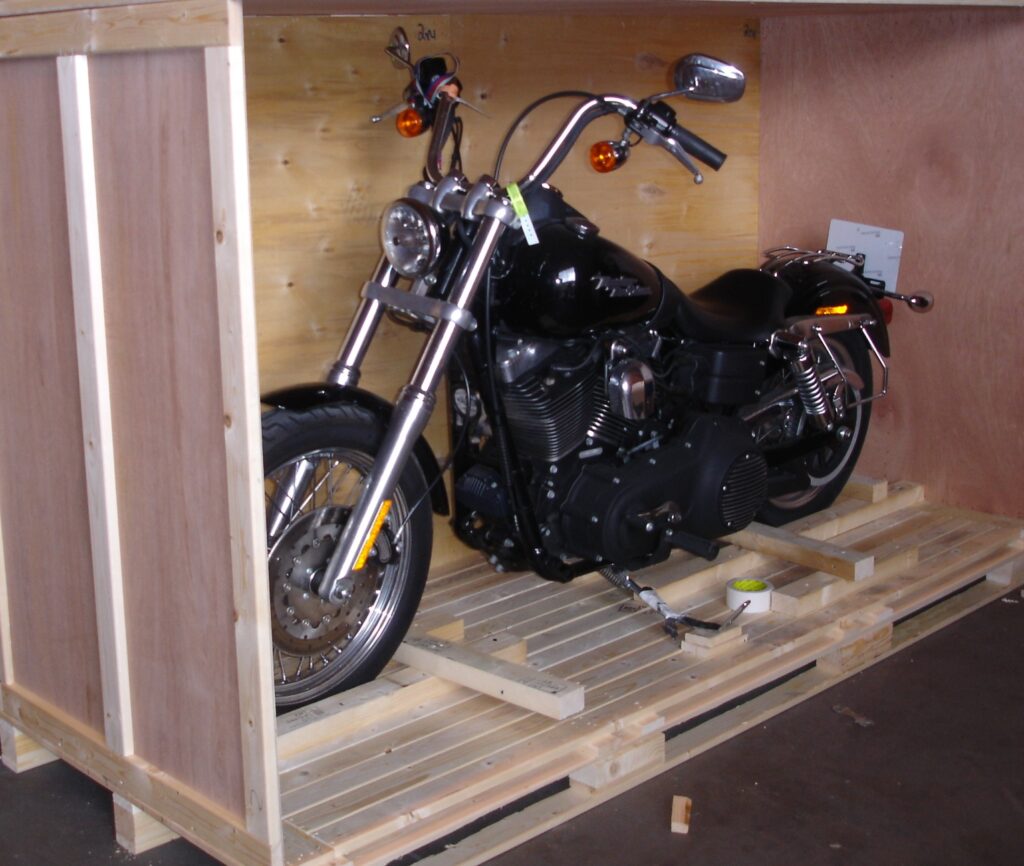

If you decide to ship a vehicle, your move manager can arrange transport by container or RoRo (roll-on/roll-off) ferry. An Egyptian customs broker handles the import declaration. All imported vehicles require a compliance inspection and Egyptian re-registration before they can be driven on Egyptian roads. Egypt drives on the right, and while UK right-hand drive cars can technically be registered, LHD vehicles are standard and far more practical.
Motorcycles are subject to the same duty structure as cars.
Bringing a pet to Egypt requires an import permit obtained from Egyptian authorities before your pet travels. Allow at least 6–8 weeks for this process.
Requirements for cats and dogs:
Some dog breeds classified as dangerous under Egyptian regulations may be prohibited from import entirely. Confirm your dog’s breed status with the Egyptian embassy or MALR before making any arrangements.
Specialist pet relocators handle the MALR permit application, health certificate coordination, and air transport. Your move manager can refer you to operators experienced on the UK–Egypt route.

Generally permitted
Used household goods, furniture, clothing, kitchenware, and personal items, declared on the CAPMAS inventory with full descriptions and values.
Restricted: subject to mandatory inspection or additional requirements
Prohibited
The practical rule for Egypt: if you are in any doubt about an item, leave it behind. A single queried item can delay the release of your entire shipment.
Groupage for a studio or one-bedroom volume costs from approximately £2,500, rising to around £4,000 for a 2–3 bedroom household. A full container load for a three-bedroom household costs from approximately £4,500. The right choice depends on your volume and on timing your shipment around the CAPMAS inventory and the 6-month rule, not on price alone. A survey gives you an accurate figure.
Groupage sea freight takes 6–8 weeks to port arrival. Customs clearance adds 2–4 weeks – longer if audio-visual items are present (allow 3 weeks minimum for AV inspection). A realistic planning window from collection to delivery is 10–12 weeks.
All audio-visual items (DVDs, books, hard drives, USB sticks, etc.) are subject to a mandatory content inspection by Egyptian customs authorities. The inspection typically takes a minimum of 3 weeks and applies to every shipment containing these items.
Household goods must arrive in Egypt within 6 months of your arrival date. Your move manager will calculate whether your timeline requires any adjustment when you book.
Passport with Egyptian Resident or Work Permit, original Bill of Lading, and a detailed inventory in English and Arabic. The Arabic translation is coordinated by the in-country partner.
No. The AV content inspection applies to every household shipment containing items like DVDs, books, or external hard drives, regardless of shipping method. FCL gets your goods to port without sharing space, but it does not bypass the inspection itself – that adds a minimum of 3 weeks either way.
Your move manager can walk you through the CAPMAS inventory process, the 6-month timing rule, and the shipping option that actually fits your move – as one decision, not three separate ones. The earlier you know how these pieces connect, the better you can plan your arrival and delivery dates, and your budget, around them.
Real feedback from people who chose our international moving company.
“Moving to Egypt involved far more paperwork and customs requirements than we expected, but the team guided us through every step. Their knowledge and communication made the entire process far less stressful, and everything arrived safely and on time.”
“Our move to Egypt was handled professionally from start to finish. The team kept us updated throughout, managed every detail efficiently, and ensured our belongings arrived in perfect condition. We felt supported the whole way through.”
“Relocating to Egypt felt like a huge undertaking, but the service we received made it straightforward and well organised. Communication was excellent throughout, and the entire move was managed with real care and attention.”