
Request a move quote
Last updated: May 2026
Switzerland is one of the most common surprises in international removals. UK movers see it on a map, surrounded by France, Germany, Austria, and Italy, and assume it works like any other European move. It doesn’t. Switzerland is not a member of the European Union, which means your belongings cross two customs borders when you move there: one leaving the UK, and one entering Switzerland.
This guide explains what that means in practice, what Form 18.44 is and who files it, and what registration on arrival looks like.



Road freight is the standard method for UK-to-Switzerland household moves. Your goods travel by truck from your UK address, through the Channel Tunnel or via ferry to France, then through France or Belgium to the Swiss border, and on to your destination.
Dedicated truck (your belongings only): Transit time 3–5 days. The fastest option, suitable for time-sensitive moves or larger households that justify the cost.
Groupage (shared service): Your goods travel with other customers’ shipments in the same truck. Transit time 7–14 days. The most cost-effective option for smaller volumes.
Cost ranges:
These are starting points. Volume, destination in Switzerland, and access conditions at both addresses affect the final figure. Zurich and Geneva are both straightforward; some older buildings in Basel and Bern’s old town have tight access for larger vehicles.

This is the section most guides skip.
Switzerland is a founding member of EFTA (European Free Trade Association) and has bilateral agreements with the EU that make daily life feel very European. But for customs purposes, it is not in the EU customs union. Every shipment of household goods crossing into Switzerland from the UK, or from any other country, goes through full Swiss customs clearance.
What this means for your move: your shipment undergoes a double customs process. UK export procedures are handled as the goods leave Britain. Swiss import procedures are handled when the goods arrive at the Swiss border. Both are managed by your removal company and their in-country partner in Switzerland, but you need to provide documentation for both.
The Swiss Federal Customs Administration (SFCA) allows households goods to be imported duty-free under Transfer of Residence (Übersiedlungsgut) relief, provided:
What is not covered: New items purchased for the move are not eligible for duty-free import. High-value electronics imported as part of a household move may be assessed individually if their total value exceeds CHF 300 (approximately £270), Swiss customs has the right to levy VAT at 8.1% on dutiable items within a removal.
Form 18.44 (Formulaire 18.44 in French, Formular 18.44 in German) is the official Swiss Customs declaration form for importing personal effects as part of a household removal. This is the specific document that makes the process work, and the one that most removal guides don’t name.
Your removal company’s Swiss in-country partner files Form 18.44 on your behalf at the Swiss border. You do not file it yourself. What you do need to provide before the shipment leaves the UK:
Your move manager compiles and checks the documentation before departure. Missing items on the inventory or insufficient proof of UK residency are the most common causes of delays at the Swiss border.
Within 14 days of arriving in Switzerland, you are legally required to register your address at your local commune’s residents’ registration office. In German-speaking cantons (Zurich, Bern, Basel, Zug) this is called the Einwohnerkontrolle. In French-speaking cantons (Geneva, Lausanne/Vaud, Fribourg) it is called the Office de la population.
This registration triggers your residence permit application and is required for almost everything that follows:
Switzerland operates a cantonal (regional) system, the rules and processes differ slightly between cantons, but the 14-day registration deadline applies across the country.
This is not your removal company’s responsibility, but knowing about the deadline before you arrive means you can book the appointment as part of your first-week planning.


Zurich: Switzerland’s largest city and financial centre. Home to major banks, professional services firms, and a significant UK expat community. Well-connected by road and rail. Urban delivery in central Zurich requires coordination around tram lines and pedestrianised zones, your move manager will flag any access issues at the survey.
Geneva: International city, UN, Red Cross, WHO, and major NGOs are based here. English is widely spoken. The canton is French-speaking. Higher proportion of diplomatic and institutional expats than Zurich. Well-connected airport with direct flights to London.
Basel: On the Rhine at the French-German-Swiss border. Home to pharmaceutical and chemical industry (Novartis, Roche). A smaller international community than Zurich or Geneva but a very liveable, compact city. The border location means excellent road freight access from the UK.
Bern: The federal capital. Home to federal government institutions and embassy staff. Quieter than Zurich or Geneva; the old town (Altstadt) is UNESCO-listed and has tight vehicle access.
Zug: A canton rather than a city, popular with finance and commodities professionals for its favourable tax rates. Close to Zurich. Property is extremely expensive.




If you’re moving to Switzerland, it’s very likely you’ll need to exchange a significant amount of currency. Many people lose out by using their bank, assuming it’s the only option. However, there are specialist currency exchange providers that offer more competitive rates and can help you save thousands. To find out how to make your money go further during your move, speak to one of our move managers, click here, or give us a call: +44 20 7097 5335.
We always advise taking out move protection liability cover with us on every move. Although we like to think we’re the best in the industry, the odd accident can occasionally happen. For added peace of mind, make sure to speak to one of our move managers about this.
UK vehicles can be imported to Switzerland and driven on UK plates for up to 12 months after establishing residence. After that, they must be re-registered in Switzerland. The re-registration process (Immatrikulation) involves a cantonal MOT-equivalent inspection and Swiss number plates.
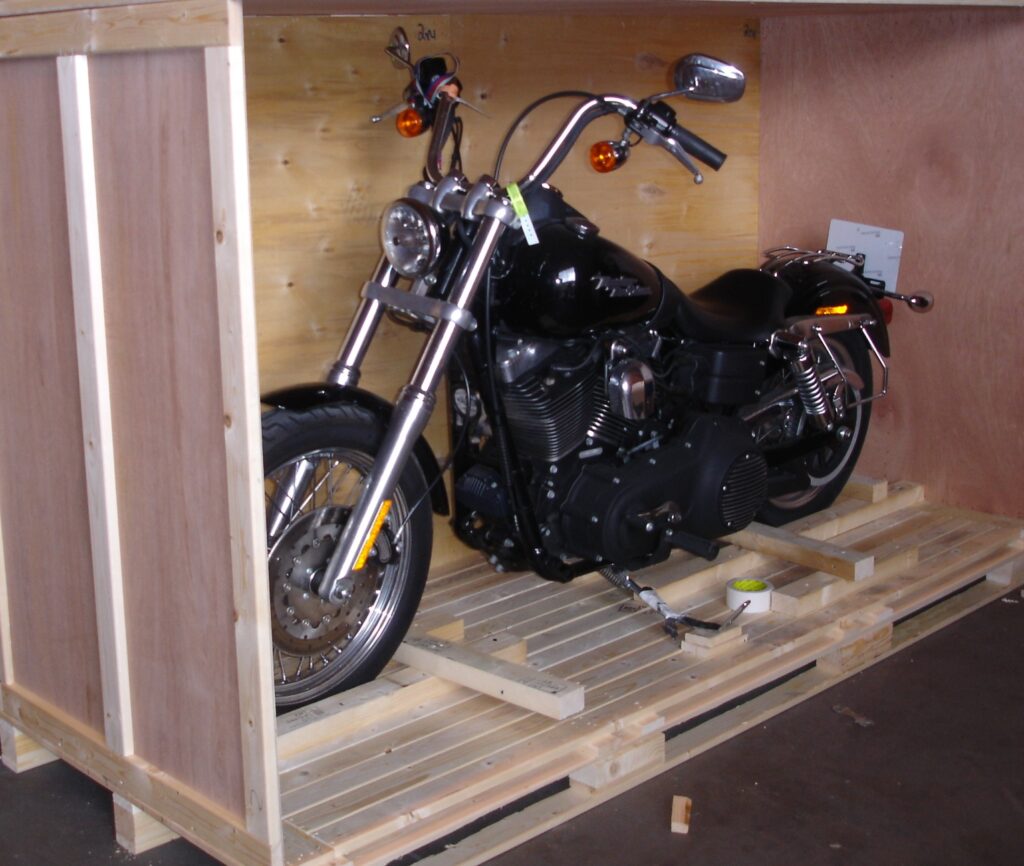
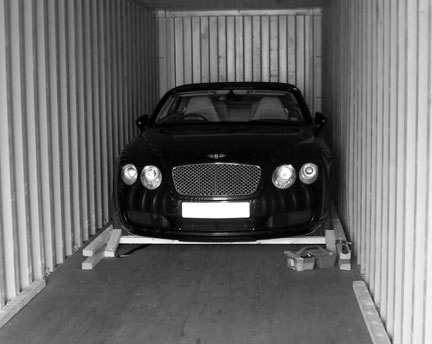
Switzerland drives on the right, UK right-hand drive vehicles are permitted, but are less practical and may attract higher insurance premiums from Swiss insurers.
Vehicle shipping is arranged separately from the household removal, typically by enclosed container or roll-on/roll-off transport. Swiss customs duty on imported vehicles is 4% of the declared value, plus Swiss VAT (8.1%). For most standard UK cars, the total import cost is moderate; for high-value vehicles, it can be significant.
Your move manager can coordinate vehicle transport alongside your household removal. Confirm at the survey whether you plan to include a vehicle.
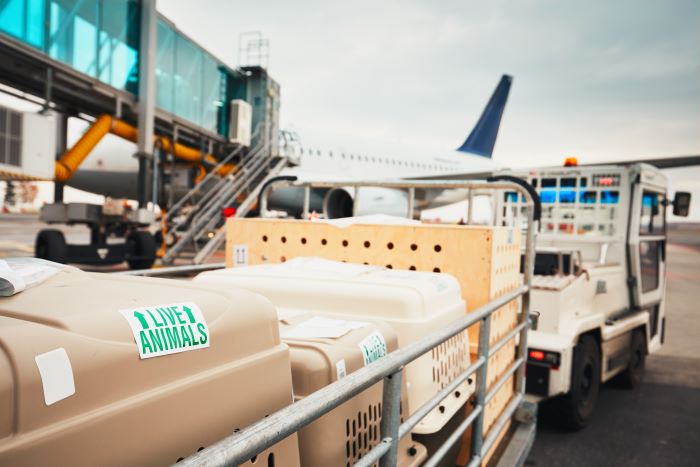
Switzerland follows EU pet import rules for cats and dogs, which apply to UK pets post-Brexit:
No quarantine is required if all conditions are met. Contact the APHA to find an Official Veterinarian who can issue the AHC. Allow at least two weeks for the vaccination and certificate process if your pet’s rabies vaccination is not current.
Other animals, rodents, rabbits, birds, have different requirements. Check with your vet and the Swiss Federal Food Safety and Veterinary Office (FSVO) for the specific rules.
Yes. Switzerland is not in the EU customs union. UK goods entering Switzerland go through full customs clearance regardless of European geography. Transfer of Residence relief allows personal effects to be imported duty-free if owned for at least 6 months. Your removal company’s Swiss in-country partner files Form 18.44 on your behalf.
Road freight takes 3–5 days for a dedicated truck and 7–14 days for groupage. Customs clearance at the Swiss end adds 1–2 business days on a properly documented move.
The Swiss Federal Customs Administration’s declaration form for importing personal effects as part of a household removal. Your in-country partner files it at the Swiss border. You provide the supporting documentation, inventory and proof of UK residency before departure.
Road freight ranges from £1,500–£2,500 for a 1-bedroom and £3,500–£5,500 for a 3-bedroom. A survey gives you an accurate figure.
Yes, within 14 days at your local commune’s registration office (Einwohnerkontrolle or Office de la population depending on your canton). Required for health insurance, banking, and most administrative steps.
Your move manager can confirm the documentation requirements for your specific Swiss destination and coordinate with our Swiss in-country partner before your shipment departs. The customs process is straightforward on a well-prepared move; the paperwork is the part worth getting right before anything leaves the UK.
Real feedback from people who chose our international moving company.
“Relocating to Switzerland required careful planning, and the entire process was handled brilliantly from start to finish. Communication was clear throughout, and everything arrived safely and exactly on schedule. It made settling into our new home completely stress-free.”
“Our move to Switzerland was managed with real professionalism and attention to detail. The team kept us informed at every stage, and all our belongings arrived in perfect condition. We couldn’t have asked for a better experience.”
“Moving to Switzerland felt like a huge step, but the service we received made the whole experience straightforward and well organised. Every detail was handled efficiently, and the support throughout the move gave us complete peace of mind.”