
Request a move quote
Ireland is one of the more straightforward destinations for UK movers – at least in terms of getting yourself there. You can live and work without a visa, open a bank account, and access public services under the Common Travel Area without any additional permit.
What trips people up is that the removal side of the move is not straightforward. Ireland is an EU member state, which means goods you are shipping from the UK cross an EU external customs border. Since Brexit, that applies to everyone. Your move manager handles all of this – customs declarations, Transfer of Residence documentation, and the paperwork required at the Irish side – but it is worth knowing what is involved before you start planning.
Planning a move to Ireland? See our separate guide to living in Ireland vs the UK for a detailed cost comparison between the two countries.



Ireland’s population is around 5.1 million, with the capital Dublin accounting for roughly 1.4 million of those. The country has grown steadily as a destination for UK movers, partly driven by proximity, partly by the strong job market in financial services, technology, and pharmaceuticals – all of which are heavily Dublin-centred.
Outside Dublin, Cork (second-largest city, population approx. 220,000) offers a more relaxed lifestyle, a strong food and culture scene, and lower property costs. Galway on the west coast has a significant student and creative population. Limerick, Waterford, and Kilkenny are increasingly popular with remote workers who want lower costs and a genuine community feel without living in rural isolation.
English is the primary language across Ireland. Irish (Gaeilge) is the first official language but is spoken as a daily language mainly in Gaeltacht areas – largely along the west and northwest coasts. This doesn’t affect day-to-day life for most UK movers unless you are specifically moving to one of these areas.
Currency: Euro (EUR). Exchange rates fluctuate – if you are sending a significant sum to Ireland to buy property or cover a deposit, consider using a currency transfer specialist rather than a high-street bank. Ask your move manager about options.

The Common Travel Area (CTA) is a long-standing agreement between the UK and Ireland that gives UK and Irish citizens the right to live, work, and access public services in each other’s country without a visa or residency permit. This has not changed post-Brexit.
What hasn’t changed: You can move to Ireland and begin work the day you arrive. You don’t need to register with any authority or apply for a permit.
What has changed: Since the UK left the European Union, goods – including household belongings shipped in a removal container – cross an EU external customs border when they move from the UK to Ireland. This applies to everyone making the move, regardless of nationality.
For your removal to Ireland, this means:
TOR Relief – who qualifies: You must have been resident outside Ireland (i.e. in the UK or elsewhere) for a continuous period of at least 12 months immediately before the move. The goods must have been in your personal possession during that period and must not be sold, hired out, or pledged within 12 months of importation into Ireland.
Documents required for your Irish removal:
Your move manager will guide you through what is needed and in what order. The Irish customs process is well-established and generally straightforward when documentation is complete – delays are almost always caused by incomplete or missing paperwork.
Ireland’s cost of living is noticeably higher than the UK average. Dublin in particular has seen significant rent and property price increases over the past decade, driven by a persistent housing shortage and a large international corporate presence.
For a detailed cost comparison – rents, grocery prices, utilities, tax rates – see our separate guide: Living in Ireland vs the UK.
Brief headline figures for 2026:
Salaries in Dublin’s technology and financial services sectors are generally competitive with London, making the overall picture more manageable for those in these industries. Outside major employment centres, you are likely to see lower salaries alongside lower living costs.
Your move manager will handle the customs documentation, shipping timeline, and everything at the Irish end — so you’re not navigating post-Brexit paperwork on your own. Get a quote to see what your removal involves.
Household goods from the UK to Ireland are shipped by road via the UK-Ireland ferry routes (typically Holyhead–Dublin, Liverpool–Dublin, or Fishguard–Rosslare, depending on your UK collection point). This is a significantly faster transit than sea freight to most other international destinations – typical door-to-door time is 1–2 weeks for shared container services, shorter for a sole-use vehicle.
Typical timelines (door-to-door from UK collection):
What the customs clearance process looks like: Your goods are declared to Revenue Commissioners (Irish customs) on arrival. With complete documentation and a valid TOR relief claim, clearance is typically handled quickly – your move manager coordinates this directly. Delays happen when the inventory is incomplete or the C&E1076 form has missing details; your pre-move survey and inventory preparation are the point where this gets sorted.
Packing advice specific to Ireland: Ireland’s climate is mild but consistently damp. If your removal is timing into an extended stay in storage – for example, if your new property isn’t ready on arrival – ask about moisture-protected storage or containerised options. This is not usually a concern for direct-delivery moves.

We always recommend speaking directly to the relevant embassy for the most accurate and up to date moving advice:
Dublin is Ireland’s economic and cultural capital, home to the vast majority of international employers and the country’s main international airport. The city centre is dense and increasingly expensive; many UK movers settle in suburbs such as Ranelagh, Rathgar, Rathmines, or the commuter belt towns of Swords, Malahide, or Bray.
Cork is the second city and a genuine alternative to Dublin – lower cost, more relaxed pace, strong food and arts scene, and increasingly well-connected by road and rail. Cork Airport has direct UK routes.
Galway attracts a creative, younger population and has a strong university and hospital presence. The surrounding west coast is some of Ireland’s most dramatic landscape.
Limerick has undergone significant urban investment in recent years and offers considerably lower property costs than Dublin or Cork. Shannon Airport is nearby, with UK and European routes.
Kilkenny and Waterford are increasingly popular with remote workers and families seeking smaller-city living with good transport connections.
For a full cost comparison by city, see our Ireland vs UK living guide.





If you’re moving to Ireland, it’s very likely you’ll need to exchange a significant amount of currency. Many people lose out by using their bank, assuming it’s the only option. However, there are specialist currency exchange providers that offer more competitive rates and can help you save thousands. To find out how to make your money go further during your move, speak to one of our move managers, click here, or give us a call: +44 20 7097 5335.
We always advise taking out move protection liability cover with us on every move. Although we like to think we’re the best in the industry, the odd accident can occasionally happen. For added peace of mind, make sure to speak to one of our move managers about this.
If you are bringing a car or motorcycle with you to Ireland, there are additional steps beyond the standard removal process.
Vehicle Registration Tax (VRT): All vehicles brought into Ireland by a person who is establishing residence must be registered with the Revenue Commissioners and VRT paid within 30 days of establishing Irish residency. VRT is calculated as a percentage of the vehicle’s open market selling price (OMSP) in Ireland – it varies by vehicle and CO₂ emissions category. Electric vehicles have historically attracted reduced VRT rates; check current rates with the Revenue Commissioners or your move manager, as these have changed regularly.
NOx Levy: A Nitrogen Oxides (NOx) charge also applies to first-registration vehicles in Ireland, based on the vehicle’s NOx emissions. This is a fixed charge based on NOx level and vehicle type, and is payable alongside VRT.
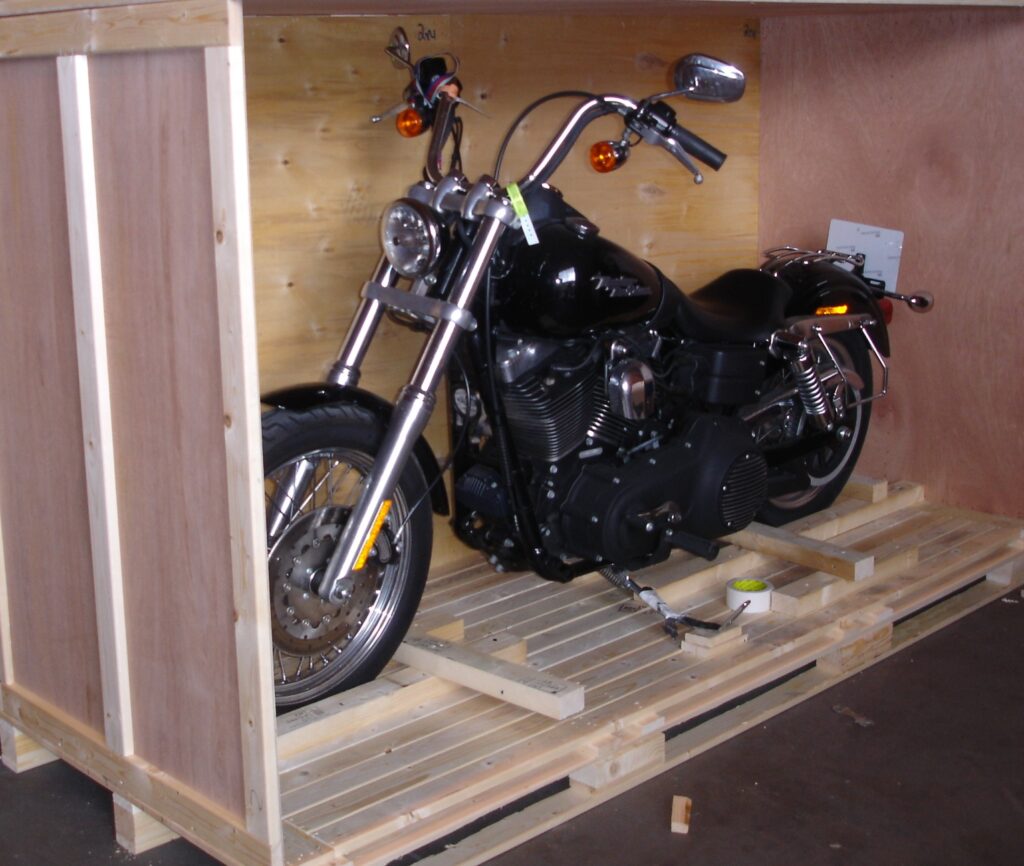
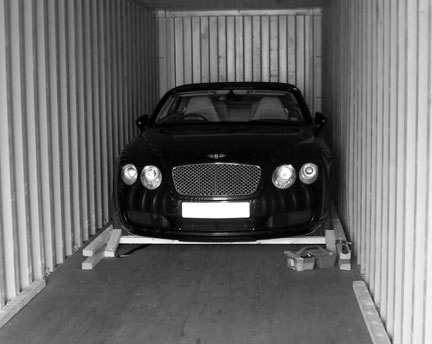
UK insurance is not valid in Ireland: Your UK car insurance policy will need to be replaced with an Irish policy. You will need to get Irish insurance in place before driving your vehicle there. UK insurers can issue a Green Card for the purpose of transit, but this covers the journey only, not ongoing residence.
Bringing your vehicle as part of your removal shipment: Vehicles can be included in the same removal vehicle or container as household goods, depending on size and timing. Your move manager can advise on whether this is practical for your specific move.
Documents required for vehicle import:
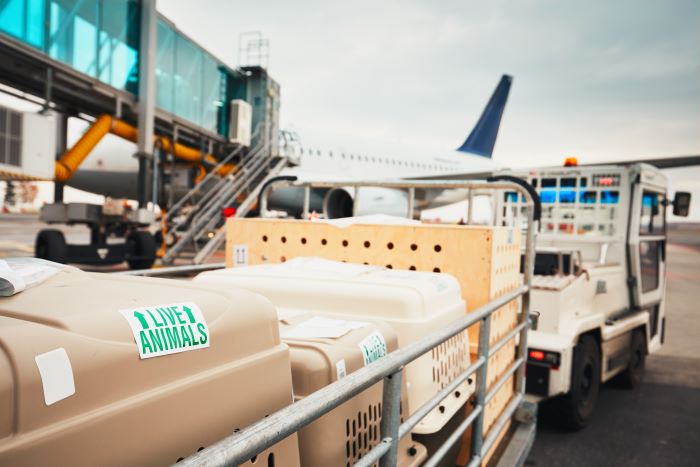
Important: your UK Pet Passport is not valid for travel to Ireland.
Since Brexit, the UK is classified as a “third country” for EU veterinary purposes. Ireland, as an EU member state, requires animals entering from the UK to comply with EU third-country import rules – regardless of the CTA agreement, which covers people, not animals.
What you need to bring a cat or dog from the UK to Ireland:
Cost and timing: Allow at least 4–6 weeks to arrange the AHC and vaccinations correctly. The AHC must be issued very close to the travel date (within 10 days) but the underlying vaccination and microchip records need to be in order well before that.
Other pets: Rules for other animals (birds, rabbits, ferrets, rodents, fish) vary and require specific permits or health certificates. Contact your move manager early if you are bringing a non-cat/dog pet – requirements vary significantly by species.
No. UK citizens have the right to live and work in Ireland under the Common Travel Area agreement, which predates the EU and was not affected by Brexit. You can move to Ireland and begin work without any permit or registration.
Yes. Since Brexit, Ireland (as an EU member state) treats the UK as a third country for goods movement. Your household belongings cross an EU customs border and must be declared. Your move manager prepares all customs documentation as part of the removal process, and most UK movers qualify for Transfer of Residence (TOR) relief, which allows duty-free import.
Typically 1–2 weeks door-to-door from UK collection, depending on your volume, route, and whether you have a shared or sole-use vehicle. Ireland is one of the faster international removals – the ferry routes are well-established and the customs process is quicker than intercontinental shipments.
Yes, but additional costs apply. Vehicle Registration Tax (VRT) and a NOx levy must be paid within 30 days of establishing Irish residency. Your UK insurance policy is not valid in Ireland – you’ll need an Irish policy in place before driving. Your move manager can advise on the practical timing of including a vehicle in your removal.
Yes, but the rules have changed since Brexit. Your UK Pet Passport is no longer valid for travel to EU countries, including Ireland. You need an Animal Health Certificate issued by an officially authorised vet in the UK, a rabies vaccination, and (for dogs) tapeworm treatment within 5 days of travel. Allow at least 4–6 weeks to get this in order.
The main documents are: a completed C&E1076 customs declaration form, proof of previous UK residence, proof of new Irish address, a detailed itemised inventory, and a PPS number application or existing PPS number. Your move manager will confirm exactly what is needed for your specific move.
Real feedback from people who chose our international moving company.
“Relocated to Cork with two small children in tow, which I dreaded. The crew wrapped the cot and labelled the boxes by room, so we found the kettle first night.”
“Moved back to Sligo after eleven years away. The ferry crossing put us a day behind and nobody rang to tell me, I had to chase. Move itself was fine.”
“Relocated to Dublin for work. The surveyor went through everything properly and the final invoice matched the quote, which hasn’t been my experience before. Packing took two days.”