
Request a move quote
If you’re relocating to Pakistan from the UK, you’re probably weighing two things at once: what it’s genuinely going to cost to get your belongings there, and how to avoid the customs delays and paperwork mistakes that turn a straightforward move into a stressful one. Whether you’re moving to Karachi for work, joining family in Lahore, or relocating to Islamabad, the process is manageable – but only if you understand the specific rules that apply to Pakistan, not generic “moving abroad” advice.
This guide covers exactly what you need: realistic shipping costs, the customs documents Pakistan requires, what you can and can’t bring, and how to handle a car, motorcycle or pet if you’re bringing one.



Pakistan’s customs process is more document-heavy than many destinations, and the rules differ depending on whether you’re a Pakistani national or a foreign national. Getting the documentation right the first time avoids the most common cause of delay: shipments held at port because paperwork was incomplete or inconsistent.
To bring your household goods and personal effects into Pakistan, you’ll need:

A few rules catch people out more than any others:
This is usually the first question, and it deserves a straight answer rather than “it depends” – even though the final figure does depend on your volume, your UK collection point, and where in Pakistan you’re delivering to.
Groupage (shared container): From approx. £1,800 for a one-bedroom volume of furniture and belongings, rising to approx. £3,200–£3,800 for a two-to-three-bedroom household. Your goods share container space with other customers’ shipments, which keeps cost down but means transit takes longer – typically 8–12 weeks port-to-port – because the container waits until it’s sufficiently full before it sails.
Full container load (FCL): Approx. £3,800–£5,500 for a three-bedroom-plus household, with transit around 6–9 weeks. Your goods travel alone, so there’s no waiting on other shipments and the customs process tends to be more predictable because handling is simpler. This is usually the better option once your volume justifies a dedicated container – as a rough guide, from around a three-bedroom household upward.
Air freight: From approx. £8–£12 per kilogram, arriving in 5–7 days. Realistically only sensible for a focused set of urgent or high-value items, not a full household – the cost per cubic metre makes it impractical for furniture and bulk belongings.
Karachi versus inland delivery – the cost driver most guides skip: Karachi (via Port Qasim or the Port of Karachi) is Pakistan’s main sea port, and the figures above assume delivery to Karachi itself. If you’re relocating to Lahore, Islamabad, Rawalpindi, Faisalabad or another inland city, your shipment needs additional road haulage from the port after it clears customs. This adds cost – typically an extra leg arranged either by your move manager as part of the quoted price or coordinated with the in-country partner – and usually adds one to two weeks to your overall timeline. Always ask whether a quoted price includes delivery to your specific address or only to the port, because “cost to Pakistan” and “cost to your door in Lahore” are not the same figure.
A survey – video or in-person – gives you an accurate quote for your specific move, factoring in your actual volume, your UK postcode, and your exact Pakistani delivery address.
We always recommend speaking directly to the relevant embassy for the most accurate and up to date moving advice:
Once your goods arrive and clear customs, delivery is coordinated with a trusted in-country partner who understands local requirements. Your move manager remains your primary contact throughout – from the initial survey and quote through to delivery – so you’re not left chasing updates from a shipping line or a customs agent directly.
Most Gerson Moving Services relocations to Pakistan go to Karachi (Sindh), Lahore (Punjab), Faisalabad (Punjab), Rawalpindi (Punjab) or Islamabad. Each has a different practical profile: Karachi benefits from direct port access; the Punjab cities and Islamabad involve the inland haulage leg described above.





If you’re moving to Pakistan, it’s very likely you’ll need to exchange a significant amount of currency. Many people lose out by using their bank, assuming it’s the only option. However, there are specialist currency exchange providers that offer more competitive rates and can help you save thousands. To find out how to make your money go further during your move, speak to one of our move managers, click here, or give us a call: +44 20 7097 5335.
We always advise taking out move protection liability cover with us on every move. Although we like to think we’re the best in the industry, the odd accident can occasionally happen. For added peace of mind, make sure to speak to one of our move managers about this.
Shipping a UK car to Pakistan is rarely worth it for most movers, and it’s worth knowing this before you plan around keeping your car.
The restriction that matters most: Pakistani national citizens generally cannot import a vehicle older than two years. Diplomats have a separate allowance and can import vehicles older than two years under diplomatic import rules. For almost everyone else, this rules out bringing an older, already-owned UK car.
Duty: Even where a vehicle qualifies, import duty on cars into Pakistan is high and calculated on the vehicle’s assessed value, engine size and age. Combined with UK right-hand-drive vehicles being the wrong configuration for Pakistan’s left-hand-drive-only roads in practice (Pakistan drives on the left with right-hand-drive vehicles, the same as the UK, so RHD is not itself the blocking issue — the age restriction and duty cost are), most people find it considerably cheaper to sell in the UK and buy locally after arrival.
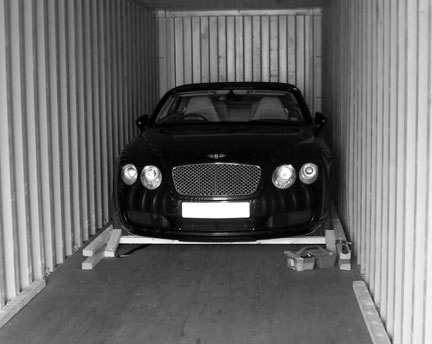
If you do proceed, you’ll need:
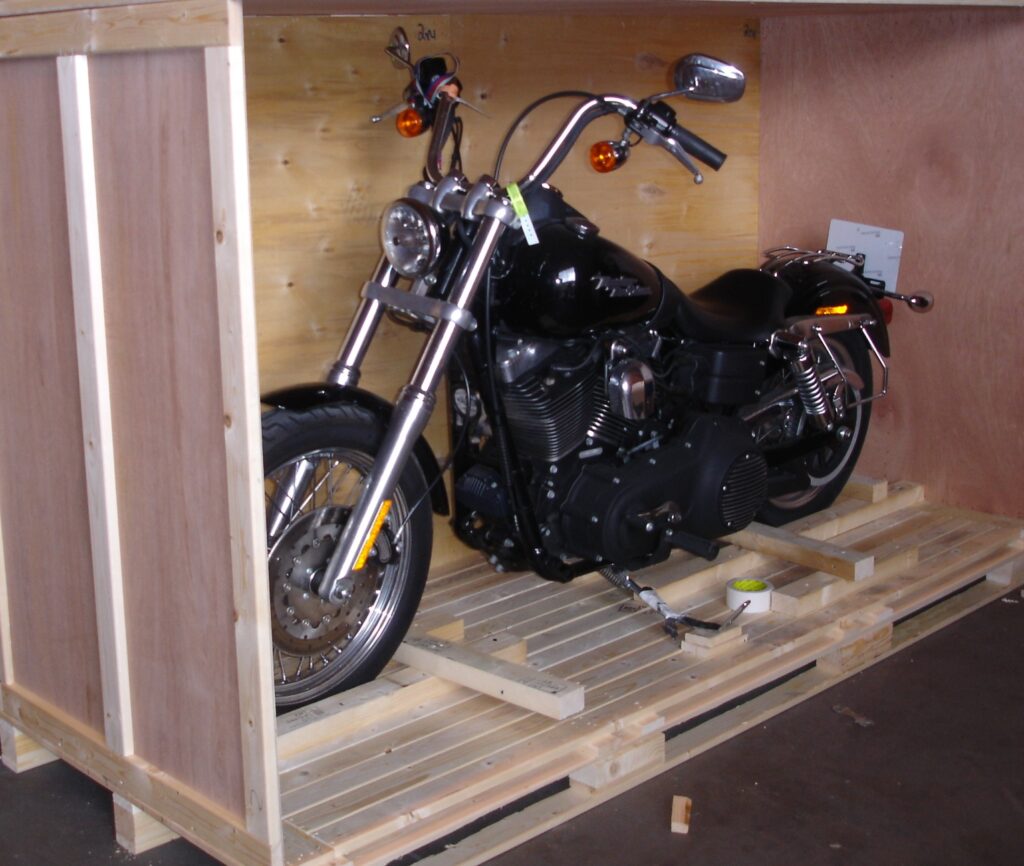
Motorcycles follow the same documentation and age-restriction principles as cars. Given the cost-to-value ratio, most people moving a two-wheeler find it more economical to buy on arrival.
Vehicle shipping, where it does go ahead, is arranged as a separate logistics stream from your household container – your move manager can talk you through whether it makes sense for your specific situation before you commit to it.
Bringing a cat or dog to Pakistan from the UK is achievable, but it needs to start early and follow Pakistani import rules precisely.
What you’ll need:
Who issues what in the UK: Your vet prepares the export health certificate, and in most cases this needs to be endorsed by an Official Veterinarian under APHA (the Animal and Plant Health Agency) before your pet travels. Build in time for this step – it isn’t same-day.
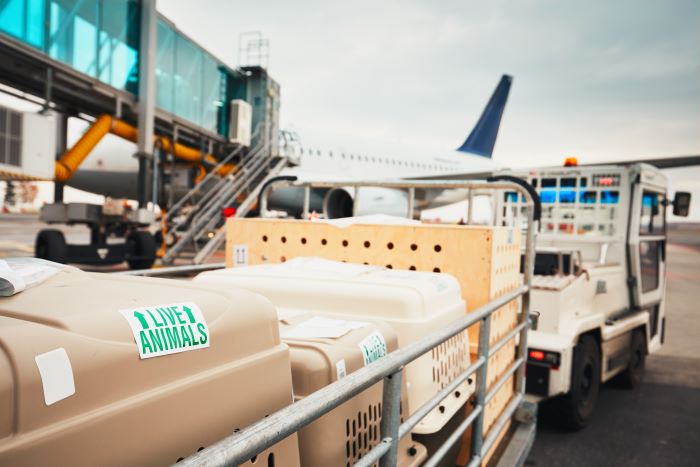
Timeline: Start the process at least two months before travel. Pets can travel as accompanied baggage, as manifest cargo, or with passengers flying, depending on size and airline policy.
Pet relocation is a specialist process, and your move manager can refer you to a dedicated pet relocation partner who handles the Pakistan-specific requirements day in, day out – this isn’t something to coordinate alone alongside a full household move.
Moving to Pakistan involves more paperwork and more customs nuance than many destinations, and mistakes here mean delay, not just inconvenience – a shipment held at Karachi port because of a valuation document packed inside a container is a genuinely difficult problem to fix quickly from the UK. That’s the specific risk a dedicated move manager is there to manage: someone who has seen this documentation set before, who knows the consignee-attendance requirement catches people out, and who stays your primary contact through survey, shipping, customs and final delivery – rather than handing you off between departments as your shipment moves through each stage.
We’re accredited by the British Association of Removers (BAR) and the International Association of Movers (IAM), and we’re part of the AGM Group of companies, giving you the backing of an established international network alongside a personal point of contact for your specific move.

Groupage (shared container) for a one-bedroom volume of furniture and belongings typically costs from approx. £1,800, rising to approx. £3,200–£3,800 for a two-to-three-bedroom household, with transit taking around 8–12 weeks port-to-port. A full container (FCL) for a three-bedroom-plus household typically runs approx. £3,800–£5,500, arriving faster at around 6–9 weeks. These figures are for delivery to Karachi; if your goods need to travel inland to Lahore, Islamabad or another city, add inland haulage on top. A survey gives you an accurate figure for your specific move.
Yes, typically. Karachi is Pakistan’s main sea port, so shipments destined for Karachi itself avoid the extra inland transport leg. Households moving to Lahore, Islamabad, Rawalpindi, Faisalabad or elsewhere inland need additional road haulage from the port, which adds cost and, usually, one to two weeks to the overall timeline.
Customs clearance in Pakistan typically takes around four to five working days after the shipment arrives, provided all documentation is in order. The consignee (the person the goods are addressed to) is required to be present for clearance, which is different from many other destinations and something to plan around if you haven’t relocated yet.
It’s rarely practical for most UK movers. Pakistani national citizens generally cannot import a vehicle older than two years, and duty on imported vehicles is high regardless of age. Diplomats have separate allowances. For most households, it works out considerably cheaper to sell the car in the UK and buy locally after arrival.
You’ll need an import permit from Pakistan’s Ministry of National Food Security and Research, a rabies vaccination certificate (given no sooner than 30 days and no more than a year before travel), a general health certificate, and an ISO-compliant microchip. In the UK, your vet arranges the export health certificate, usually endorsed by an Official Veterinarian under APHA. Start the process at least two months ahead, and use a specialist pet relocator — your move manager can refer one.
Weapons of any kind, pornography, narcotics, alcohol, and toxic or radioactive materials are all prohibited outright. Items like tobacco, perfume and gifts are permitted only in small declared quantities and will incur duty above those limits. Never include insurance documents or paperwork that shows the value of your household goods inside the shipment itself, as this can trigger higher import duty assessments.
If you’re planning a move to Pakistan, the most useful next step is a survey – video or in person – so your move manager can give you an accurate cost for your actual volume and your specific delivery address, whether that’s Karachi itself or further inland. Your move manager is your primary contact from that first survey through to delivery, so you always know who to ask and where things stand.
This information is provided as a guide only. Customs regulations can change at any time with or without notice. While Gerson Moving Services has exercised reasonable care in publishing this information, Gerson Moving Services makes no representation, either expressed or implied, as to its accuracy or applicability to your specific circumstances. Confirm current requirements with your move manager before shipping.
Real feedback from people who chose our international moving company.
“Moving to Pakistan meant dealing with customs requirements that seemed quite daunting at first, but Gerson handled everything brilliantly. They kept us updated throughout the journey, answered every question promptly, and made sure our belongings arrived safely and on time. The whole experience was far less stressful than we expected.”
“From our initial survey through to delivery in Pakistan, the service was excellent. The packing team were careful and efficient, communication was outstanding, and we always knew what was happening with our shipment. We felt supported throughout the entire move and would happily recommend Gerson to anyone relocating overseas.”
“Relocating our family to Pakistan was a major life change, but Gerson made the moving process straightforward. Every stage was well organised, our belongings arrived in excellent condition, and the team were always friendly, knowledgeable and quick to respond. Their experience with international moves really showed.”