Request a move quote
Moving to South Korea is rarely a spontaneous decision. By the time most people start planning the removal, they have already spent months researching visas, housing, and schools. What they often haven’t researched – because no guide explains it clearly – is the one requirement that controls the timing of everything else: the Alien Registration Card.
Your household shipment cannot clear Korean customs without an Alien Registration Card (ARC). The ARC takes 14–21 days to process after you arrive in South Korea and apply in person at an immigration office. Which means if your shipment arrives before your ARC is ready, it will sit at the destination until you have the card – and that is a very common outcome when move timing isn’t planned around this specifically.
This guide explains how a UK-to-South Korea move actually works, what it costs, and how to plan shipping and timing together, with enough operational detail to plan yours accurately.



Sea freight is the standard method for UK-to-South Korea household moves. There is no road route and the distances involved make air freight viable only for small volumes or genuinely urgent shipments.
Shared container (groupage / LCL): Your goods travel alongside other customers’ shipments in a shared container. This is typically the most cost-effective option for anything up to two rooms of furniture. Transit time: 8–10 weeks from collection to delivery.
Full container (FCL): A container dedicated to your move alone. More expensive, but faster and more controlled. Transit time: 6–8 weeks. Typically the right choice for a 3-bedroom household or larger.
Air freight: Transit time of 5–7 days. Used for small volumes, essential items that need to arrive quickly, or situations where sea freight timing doesn’t work. The cost per cubic metre or kilogram is several times higher than sea freight. For most UK families moving to South Korea, air freight for a few priority items alongside sea freight for the main shipment is a practical combination.
Cost ranges:

This is the question most people searching for “furniture removals to South Korea” or “house removals to South Korea” actually want answered, so here it is in full – and here is the detail most cost pages leave out: what you choose to spend on shipping should be decided alongside your ARC timeline, not separately from it.
Groupage (shared container): From £2,500 for a one-bedroom volume of furniture and belongings, rising with volume – a typical two-bedroom household runs higher depending on what you’re bringing. Transit is 8–10 weeks port-to-port. This is the option most house removals to South Korea use, because most household volumes don’t justify a dedicated container.
Full container (FCL): £5,000–£8,000 for a three-bedroom household. Transit is 6–8 weeks – two to four weeks faster than groupage, because your goods aren’t waiting for other customers’ shipments to fill the container. If you’re moving a full house rather than a flat’s worth of furniture, FCL is usually the better value once you account for the time saved.
Air freight: From approximately £200 per 10kg. Transit is 5–7 days. Realistically only sensible for a small, specific volume – essential documents, a few suitcases of clothing, items you need in the first fortnight – rather than full household furniture.
Why the cheapest or fastest option isn’t automatically the right one: A faster shipment doesn’t help if it arrives in South Korea before your ARC does. Korean customs will not release your goods without your ARC number, regardless of how much you paid for transit speed. If you book FCL specifically to get your furniture there quickly, but your ARC application is still mid-process, your belongings sit at Busan port waiting – the same outcome as if you’d booked the cheaper, slower groupage option in the first place.
The decision that actually saves money and stress is matching shipment departure date to your arrival date in South Korea, not to the cheapest or fastest sailing available. A groupage shipment that arrives two weeks after your ARC is approved costs less and causes no more delay than an FCL shipment that arrives two weeks before it. Your move manager works backwards from your planned South Korea arrival date to recommend which shipping method actually gets your furniture to your address fastest – accounting for the ARC wait, not just the transit time on the booking confirmation.
A professional survey before booking gives you an accurate cost for your specific volume – the ranges above are starting points for planning, not fixed quotes. See our South Korea removals service guide for full move options and to request a quote.
The Alien Registration Card (ARC) is South Korea’s official residence document for foreign nationals who intend to stay for more than 90 days. Almost everyone moving to South Korea for work, education, or family reasons will need one.
The requirement that affects your removal is this: Korean customs authorities require your ARC number before they will release a household goods shipment for delivery. Without it, the shipment clears Busan port but cannot proceed to your address.
The practical implication: if your sea freight shipment arrives at Busan 9 weeks after collection and you arrived in South Korea 8 weeks after collection, you may be waiting 1–2 weeks after arrival for your ARC before your belongings can be delivered. This is normal and manageable; but you need to know about it before you plan your departure date.
What to do: When you book your removal, tell your move manager your planned arrival date in South Korea. They will work backwards from that date to advise on the shipment departure window that minimises the wait time at the Korean end.
South Korea allows the duty-free import of used personal effects and household goods under the personal effects exemption, provided:
Documents typically required:
Your removal company’s in-country partner at Busan handles the customs submission. The documentation required can vary slightly depending on your visa type; your move manager will confirm the specific requirements for your situation when you book.
We always recommend speaking directly to the relevant embassy for the most accurate and up to date moving advice:
All sea freight household goods entering South Korea for residential delivery pass through Busan Port; the main commercial and residential import hub on South Korea’s south-eastern coast.
From Busan, the in-country partner organises inland delivery to your address. The distances involved:
Destination | Road distance from Busan | Typical delivery window after customs clearance |
Seoul (Gangnam, Itaewon, Mapo) | ~325 km | 1–2 days after clearance |
Incheon | ~340 km | 1–2 days after clearance |
Daejeon | ~180 km | 1 day after clearance |
Daegu | ~90 km | Same day or 1 day |
Busan delivery | At port | Same day as clearance |
Seoul is home to the majority of UK expats in South Korea and is a 4–5 hour drive from Busan. The in-country partner manages this leg; it is coordinated as part of the full door-to-door service.

The visa you hold determines some aspects of the customs clearance process, so it is worth understanding which category applies to your move. The main routes for UK nationals relocating to South Korea:
D-7 / D-8 (Corporate Transfer / Business): For employees transferred to a Korean company or a Korean subsidiary of a UK company. Requires sponsorship from the Korean employer.
E-2 (English Language Teaching): Common among UK nationals. Requires a contract with a school or language institute and a criminal background check.
F-2 (거주, Long-term Resident): Available to people who have been in South Korea on other visa types for a qualifying period, or who are married to a Korean national.
D-10 (Job Seeker): Allows qualified individuals to enter South Korea to look for work. Not an employment visa; it permits presence while seeking a job.
Retirement or long-term stay: South Korea does not have a specific retirement visa. Options depend on family ties, investment, or other qualifying factors.
The Korean consulate in London processes most visa applications. Apply well in advance of your move; several visa types require employer sponsorship paperwork, background checks, and medical certificates that take time to compile.
Most UK nationals in South Korea are based in Seoul, but a significant number live in Busan, Daejeon, Incheon, and the surrounding regions. Here is a brief orientation:
Seoul: The capital and largest city. Home to the majority of international companies and English-language schools. Neighbourhoods with the largest expat communities include Itaewon (historic international area), Gangnam, Mapo, and Yongsan. Housing costs are high; a two-bedroom apartment in a central neighbourhood will typically cost £1,800–£3,500 per month to rent.
Busan: South Korea’s second city and a port city with a more relaxed atmosphere than Seoul. Smaller international community but a strong expat presence, particularly in Haeundae and Nampo. Housing costs are lower than Seoul.
Daejeon and Daegu: Mid-sized cities with lower costs. Less common for UK expats but home to universities and some international employers.
Incheon: Adjacent to Seoul and home to Incheon International Airport; effectively part of the Seoul metropolitan area for most practical purposes. Many families live in Incheon and commute to Seoul.


Before departure from the UK: Coordinates documentation; packing list, inventory format for Korean customs, timing of shipment relative to your arrival date in South Korea. Confirms ARC timing requirements for your specific visa type.
During transit (8–10 weeks): Your move manager is the point of contact for progress updates. If there is a delay at any point in the sea freight chain, they will communicate this.
At Busan: The in-country partner receives the shipment at the port and holds it until the ARC number is confirmed. Once confirmed, they submit the customs declaration and manage clearance.
Delivery: After customs clearance, the in-country partner delivers to your Korean address. Your move manager follows up to confirm completion.



If you’re moving to South Korea, it’s very likely you’ll need to exchange a significant amount of currency. Many people lose out by using their bank, assuming it’s the only option. However, there are specialist currency exchange providers that offer more competitive rates and can help you save thousands. To find out how to make your money go further during your move, speak to one of our move managers, click here, or give us a call: +44 20 7097 5335.
We always advise taking out move protection liability cover with us on every move. Although we like to think we’re the best in the industry, the odd accident can occasionally happen. For added peace of mind, make sure to speak to one of our move managers about this.
South Korea drives on the right, meaning Korean roads are built for left-hand drive (LHD) vehicles. UK cars are right-hand drive (RHD). RHD vehicles are not permitted for standard road use under South Korean traffic law, which requires LHD registration for privately used vehicles.
In practice, the vast majority of UK expats moving to South Korea do not ship their personal vehicle. The practical recommendation is to sell your UK car before leaving and purchase locally in South Korea.
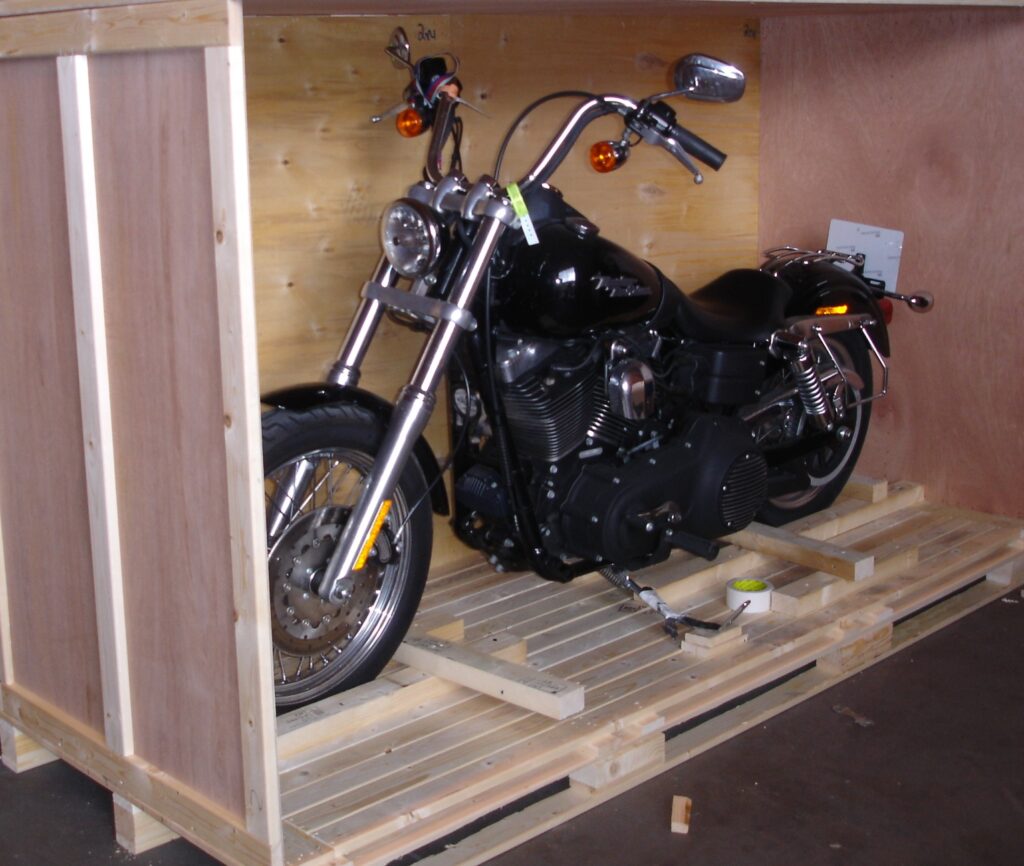
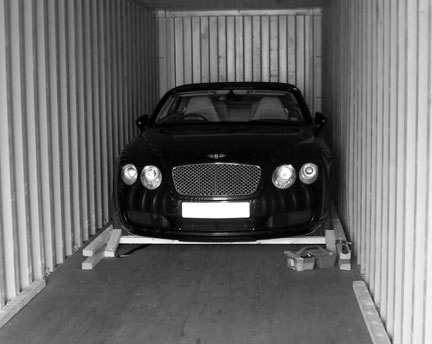
If you have a specialist, collector, or high-value vehicle you want to ship for personal use, your move manager can arrange vehicle transport by container. Korean customs duty on imported vehicles is 8% of the declared value, plus individual consumption tax and VAT; the combined import tax burden typically runs to 20–30% of vehicle value. A formal customs valuation will be required, and only approved inspection centres can certify the vehicle for Korean registration.
Motorcycles are subject to the same import framework, with duty rates varying by engine size.
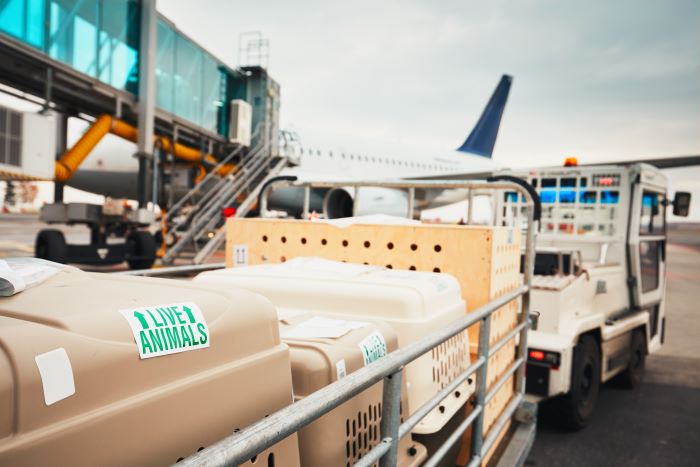
South Korea’s pet import process is managed by the Korean Animal and Plant Quarantine Agency (QIAP). The process for dogs in particular requires several months of preparation; start well before any other aspect of the move.
Requirements for dogs:
Requirements for cats:
Because the FAVN titer test process takes several months from start to finish, pet relocation should be planned before almost anything else on this move. Specialist pet relocators handle the documentation, QIAP quarantine coordination, and air transport. Your move manager can connect you with operators experienced on this route.
Generally permitted
Used household goods, furniture, clothing, kitchenware, books, and personal electronics ship under the personal effects duty-free exemption, provided items have been owned and used for at least 6 months.
Restricted; subject to inspection or additional requirements
Prohibited
A complete, accurate inventory – every item listed individually – is the most effective way to avoid delays at Korean customs, regardless of which shipping method you choose.
Groupage for a one-bedroom volume of furniture costs from approximately £2,500 and takes 8–10 weeks. A full container load for a three-bedroom household costs £5,000–£8,000 and takes 6–8 weeks. Air freight starts from around £200 per 10kg and arrives in 5–7 days, but is realistically only suitable for small, urgent volumes. A survey gives you an accurate figure for your specific move.
Sea freight groupage takes approximately 8–10 weeks from collection to delivery at your Korean address. Full container load (FCL) is 6–8 weeks. Air freight is 5–7 days and is typically used for small volumes or urgent items.
The ARC is South Korea’s official residence document for foreign nationals staying more than 90 days. Korean customs will not release your household shipment without your ARC number. The ARC takes 14–21 days to process after you arrive and apply. Plan your shipment departure date so that your ARC is ready around the time your shipment arrives.
Valid passport, Korean visa or entry confirmation, ARC number (or application reference), and a detailed inventory of all items. Your removal company’s in-country partner handles the customs submission using these documents.
Busan Port, on South Korea’s south-eastern coast. From Busan, goods are transported inland to your delivery address; Seoul is approximately 4–5 hours by road.
Technically, yes – but it’s rarely practical. South Korea requires left-hand drive vehicles for standard road use, and UK cars are right-hand drive. Most UK expats sell their car before leaving and buy locally instead. If you have a specialist or high-value vehicle, your move manager can arrange container transport, though import duty and consumption tax typically add 20–30% to its value.
Your move manager can advise on the ARC timing, the right shipping method for your budget, and the exact shipment window for your planned departure date – as one decision, not three separate ones. Getting this coordination right at the start prevents the most common source of delay and unexpected cost on this route.
Real feedback from people who chose our international moving company.
“Relocating to South Korea felt like a big step, but the entire process was handled with great care and efficiency. Communication was clear throughout, and everything arrived safely and on time. It made settling in so much easier.”
“Our move to Asia was organised and stress-free from start to finish. The team kept us informed at every stage, and everything arrived in excellent condition. It gave us real confidence throughout the relocation.”
“Moving to South Korea could have been overwhelming, but the service we received made it straightforward and well managed. The team were responsive, professional, and handled every detail with care. We couldn’t have asked for more.”