
Request a move quote
Last updated: June 2026 | Author: Gerson Moving Services team
Thailand is one of the most established international relocation destinations for UK nationals — retirees, professionals, and families are drawn by the cost of living, climate, and quality of life. The logistics of moving there are also well-trodden: shipping routes are reliable, paperwork is manageable, and the process is well-understood by experienced removal companies.
What catches people out is not the shipping itself, but the timing. Thailand’s customs rules tie the release of your household goods directly to your immigration status – and specifically to your work permit, if you are moving on a work visa. Understanding that connection before you book your collection date will save you a significant amount of stress and cost at the other end.

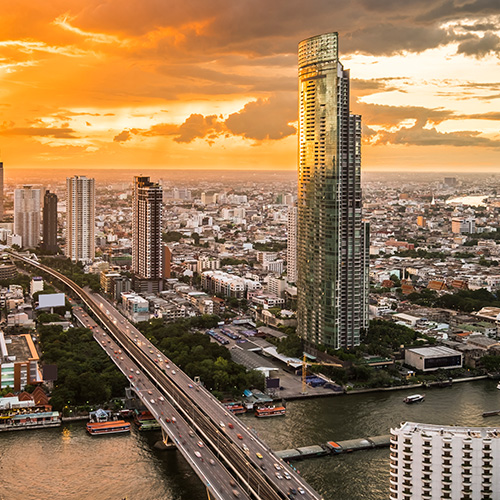

Sea freight is the standard method for UK-to-Thailand household moves. The main arrival port is Laem Chabang, Thailand’s largest container port located south of Bangkok near Pattaya. Some shipments route to Klong Toey (Bangkok Port) depending on the service and final delivery address.
Groupage (shared container, LCL): Your goods share a container with other customers’ shipments. Transit time from UK ports to Laem Chabang: 40–45 days port-to-port.
Full container load (FCL): A dedicated 20ft or 40ft container exclusively for your move. Transit time: 30–37 days port-to-port. Goods are sealed for the entire journey with no additional handling en route.
Air freight: 5–7 days door-to-door. Suited to priority items – documents, laptops, essential clothing – while the main shipment travels by sea.
Cost ranges (2026 estimates):
Allow 6–8 weeks from collection to delivery as your planning timeline for sea freight, adding time for Thai customs clearance once your shipment arrives at port.

This is the section that most guides do not cover clearly enough.
Thai customs grants duty-free import of used personal effects to foreign nationals genuinely relocating to Thailand, but the conditions depend on your visa type, and they matter.
The 6-month arrival window: Your shipment must arrive in Thailand within 6 months of your first arrival in Thailand on a non-immigrant visa. Dispatch the shipment too late, and you will miss the window and face duties on the entire contents.
The work permit requirement (Non-Immigrant B visa holders): If you are moving on a Non-Immigrant B (work) visa, Thai customs requires that your 12-month work permit is in place before your goods can be released. The permit must be unconditional and valid for 12 months. Your visa must also be stamped for 12 months by Thai immigration.
This is the timing issue that most people don’t plan for. Work permits in Thailand typically take 4–8 weeks to process after you start employment. If your sea freight shipment arrives at Laem Chabang during that window — which it often does, given that the transit time is 30–45 days — your belongings will be held at the port until the permit is issued. Port storage fees at Thai ports accumulate daily and are not always within the removal company’s control.
The practical solution is to discuss dispatch timing with your move manager before collection day. In some cases, a short delay to the collection date, or use of storage in transit at the UK end, will mean the shipment arrives in Thailand after the work permit has been issued rather than before it.
Retirement and LTR visa holders: O-A and LTR visa holders have a different customs pathway — the 12-month work permit requirement does not apply. Contact your destination agent to confirm the documentation required for your visa category.
What qualifies as duty-free: Items must be used personal effects that have been owned and used for at least 6 months before the move. New items — electronics still in original packaging, unworn clothing with tags, new furniture — are subject to customs duty and VAT on inspection.
One appliance per category: Thai customs allows one unit per type of electrical appliance duty-free (one television, one washing machine, one refrigerator, and so on). Additional units of the same appliance type are subject to duty. Declare each item accurately – Thai customs uses automated risk scoring and stricter digital matching since 2026.
Inventory requirements: A detailed inventory in both English and Thai is required for customs clearance. Your removal company prepares the English version; your destination agent handles Thai translation and submission.
Non-Immigrant B Visa (work): For those with a confirmed job offer from a Thai employer. The employer applies for a work permit from the Department of Employment before or shortly after you arrive on the Non-B visa. Work permits typically take 4–8 weeks to process. This visa type has the most customs clearance implications – see the section above.
Retirement Visa (O-A): Available to UK nationals aged 50 and over. Requires either a ฿800,000 deposit (approx. £18,000) held in a Thai bank account, or proof of monthly pension or income of ฿65,000 (approx. £1,500) per month, or a combination totalling ฿800,000 per year. Renewable annually. Does not permit employment.
Long-Term Resident (LTR) Visa: Up to 10 years. Available to qualifying wealthy retirees ($80,000+/year in passive income, or $40,000+/year plus a $250,000 investment in Thailand), remote professionals employed by overseas companies, and investors. Offers streamlined customs clearance compared to the Non-B route.
(Figures verified June 2026. Thai immigration thresholds are reviewed periodically — confirm current requirements through the Thai Embassy in London before applying.)
We always recommend speaking directly to the relevant embassy for the most accurate and up to date moving advice:
Most UK movers settle in one of four areas, each suited to a different stage of life and work.
Bangkok: The capital and the centre of international business, with the largest concentration of UK expats, multinational employers, and international schools. Sukhumvit is the main expat corridor, with Thong Lor, Ekkamai, and Asoke the most established sub-areas. A one-bedroom apartment runs from roughly ฿13,000–45,000 per month (~£295–£1,020), depending on building age and proximity to the BTS Skytrain.
Chiang Mai: Thailand’s second city and the most popular choice for remote workers and retirees, with a long-established digital nomad community, a lower cost of living, and a notably cooler climate from November to February. One-bedroom apartments start from around ฿8,000–20,000 per month (~£180–£455).
Phuket: Thailand’s largest island and a long-standing expat and tourism hub, popular with families and those working in hospitality, diving, and property. Costs are higher than the mainland — one-bedroom apartments typically run ฿10,000–35,000 per month (~£225–£795).
Hua Hin: A long-standing retirement destination around three hours south of Bangkok, known for its relaxed pace, golf courses, and established private healthcare. A small house with a garden typically rents for ฿12,000–20,000 per month (~£270–£455).





If you’re moving to Thailand, it’s very likely you’ll need to exchange a significant amount of currency. Many people lose out by using their bank, assuming it’s the only option. However, there are specialist currency exchange providers that offer more competitive rates and can help you save thousands. To find out how to make your money go further during your move, speak to one of our move managers, click here, or give us a call: +44 20 7097 5335.
We always advise taking out move protection liability cover with us on every move. Although we like to think we’re the best in the industry, the odd accident can occasionally happen. For added peace of mind, make sure to speak to one of our move managers about this.
Thailand drives on the left – right-hand drive UK vehicles are road-legal here, which is different from most Asian relocation destinations. That is where the practical advantages end.
Import duty on vehicles: Total import taxes on vehicles entering Thailand – combining import duty, excise tax, and VAT – reach 213–308% of the vehicle’s assessed value, depending on engine size and type. A UK car worth £15,000 could cost £30,000–£45,000 or more to import once all duties are applied.
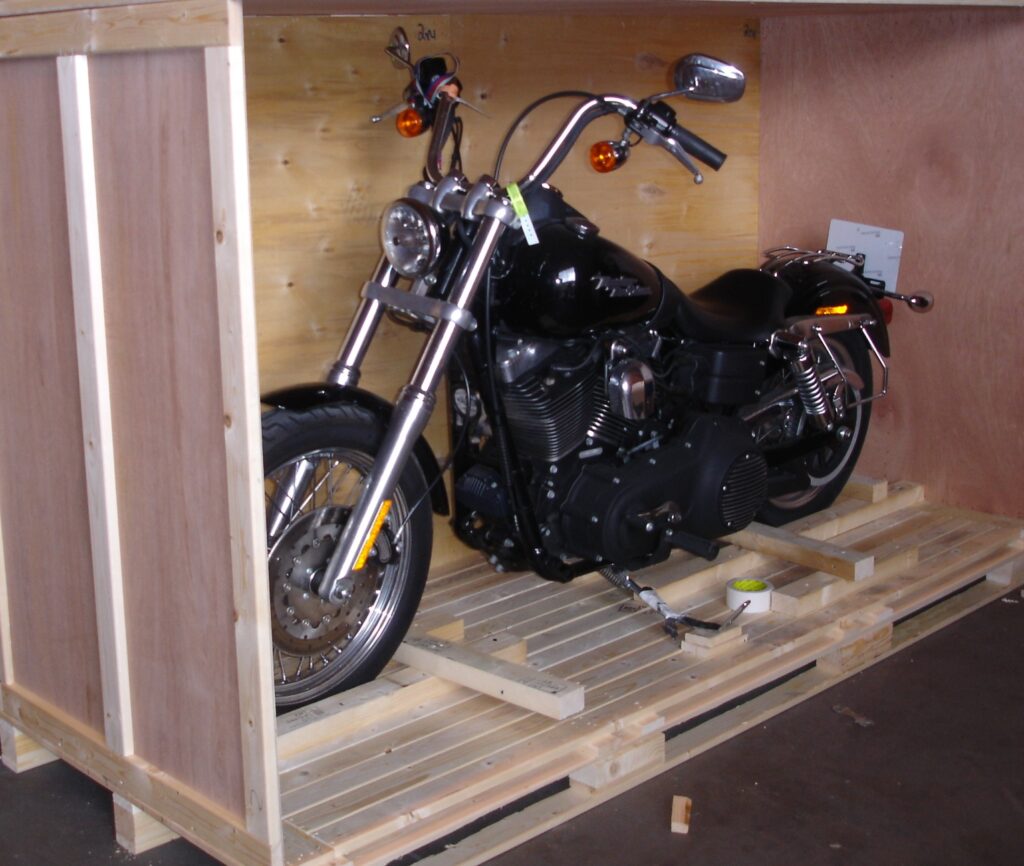
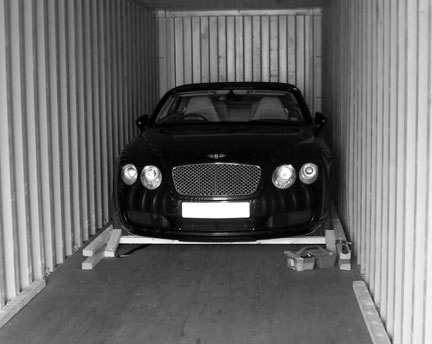
The practical outcome: Almost no UK movers bring their car to Thailand. The domestic new and used vehicle market is large, well-priced, and fully right-hand drive. Selling your UK vehicle before departure and purchasing locally is the decision almost everyone takes once they understand the duty structure.
Motorcycles: Thailand has one of the largest motorcycle markets in the world. Import duties apply on the same scale as cars. Local purchase is significantly more cost-effective.
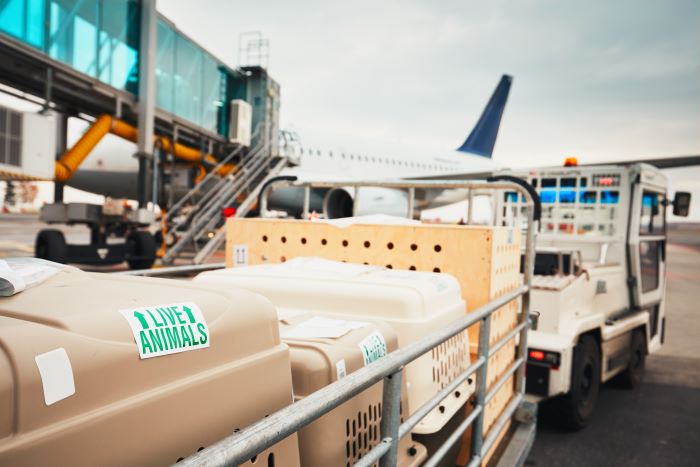
Dogs and cats from the UK can be imported into Thailand without quarantine if all conditions are met. The process is manageable but requires early preparation – the import permit has a 60-day validity window, so timing matters.
Requirements for dogs and cats:
No quarantine is required for UK pets meeting the above conditions on arrival.
Apply for the import permit at least 6–8 weeks before your move date to allow processing time and ensure the 60-day validity aligns with your pet’s travel date. A specialist pet relocator can manage the APHA endorsement and coordinate with your move manager on timing.
Approved arrival airports: Suvarnabhumi Airport (Bangkok) and Don Mueang International Airport are the standard entry points for pets.
Generally permitted: Used household furniture, clothing, books, and personal items for genuine personal use. Used electronics (one unit per appliance type, duty-free). Personal collections – art, instruments, sporting equipment – as part of a genuine household removal.
Restricted: subject to declaration, duty, or limits:
Prohibited:
One practical rule: if it is new, declare it. Thai customs uses automated data matching and has tightened enforcement significantly in 2026 – underdeclared or misdescribed items are likely to be flagged.
Sea freight from the UK to Laem Chabang takes approximately 30–37 days for a full container and 40–45 days for groupage. Allow 6–8 weeks from collection to delivery as your planning timeline, plus additional time for customs clearance once the shipment arrives.
No – if you are moving on a Non-Immigrant B visa, your household goods cannot be released duty-free until a valid 12-month work permit is in place. If the shipment arrives before the permit is issued, it will be held at port. Discuss dispatch timing with your move manager before collection day.
The right route depends on your reason for moving: Non-Immigrant B for those with a confirmed employer, Retirement O-A for over-50s meeting income or savings thresholds, or LTR visa for qualifying professionals, retirees, and investors.
Yes, without quarantine if your pet meets the requirements: ISO microchip, rabies vaccination at least 21 days before travel, APHA-endorsed health certificate, and an import permit from Thailand’s Department of Livestock Development obtained before departure.
Rarely. Import duties of 213–308% make the cost of importing a UK vehicle far higher than buying locally. Thailand drives on the left, so right-hand drive vehicles are road-legal – but the duty structure makes shipping impractical for most people.
Groupage for a 1-bedroom volume typically costs from £2,000–£3,500. A full 20ft container runs from £3,500–£5,500, and a 40ft container from £5,500–£8,000. A survey before booking gives you an accurate figure.
The work permit timeline is the single biggest variable in a Thailand move – your move manager will factor it into the dispatch schedule from the start, so the shipment arrives when customs can actually release it. Thailand is a well-served route with reliable shipping options; the planning stage is where the detail matters.
Real feedback from people who chose our international moving company.
“My move was way less stressful than expected! GMS packed everything, stored it for a week, and moved it all to my new home just as promised!”
“GMS provided a very professional service when we moved to Spain last month. They were easy to work with and moved everything on time.”
Best experience ever! I desperately needed a mover to help with a last minute relocation, and GMS were so helpful in making it a seamless process!”